When Indus Met Thames
Some journeys are never measured on maps.
They are completed in the human heart.
Some distances cannot be counted in miles. They stretch instead across centuries, languages, memories and civilisations. And sometimes, two rivers flowing thousands of miles apart meet—not through geography, but through culture.
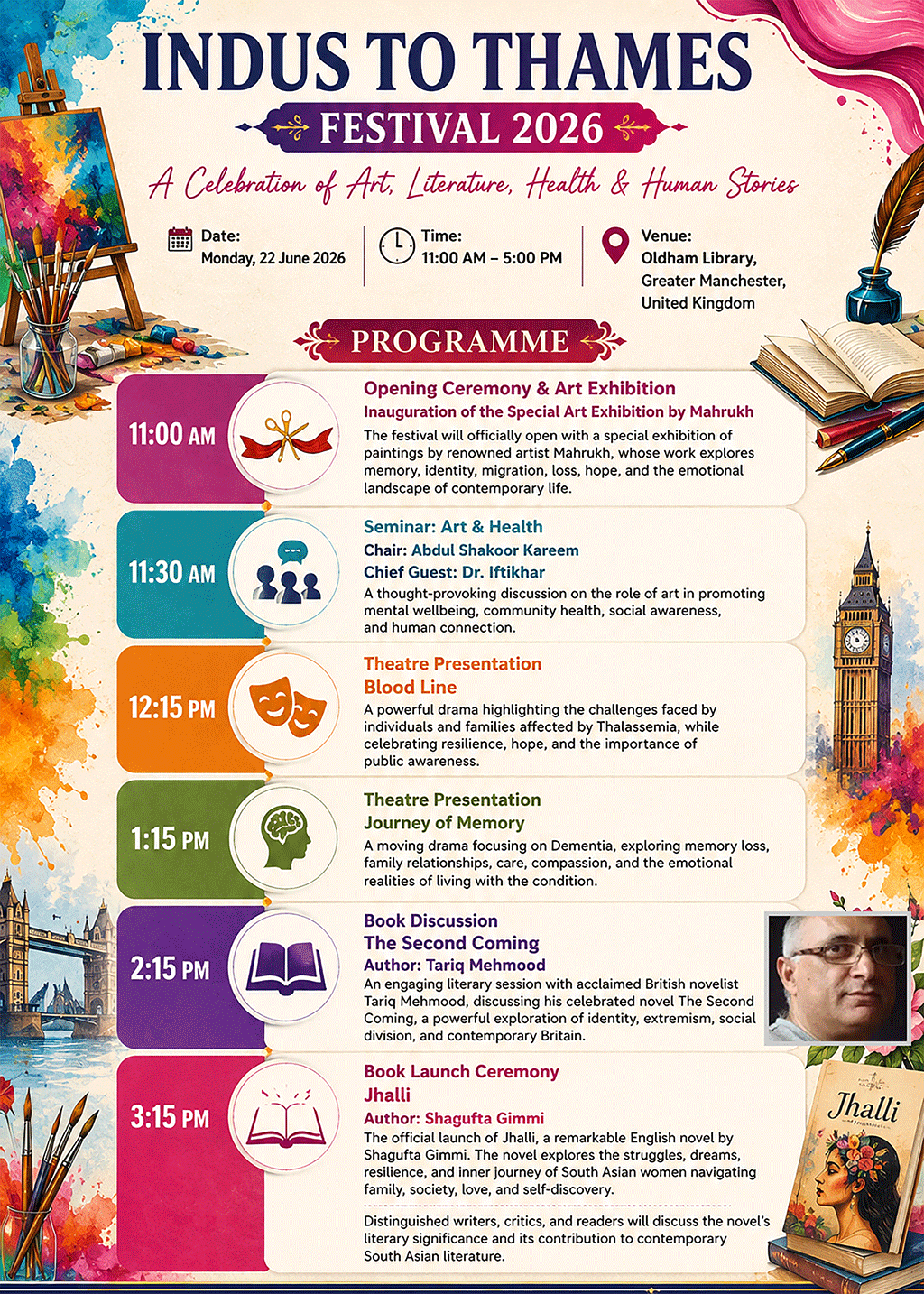
That moment became Indus to Thames Festival 2026.
On a bright June morning, Oldham welcomed visitors beneath a gentle English sky. Soft clouds drifted across the sun as a cool breeze moved quietly through the trees surrounding Oldham Art Gallery. Long before the official opening, people had begun gathering outside the venue. Conversations unfolded in English, Urdu and Punjabi. Smiles replaced introductions, and strangers quickly became companions united by a shared love for literature, art and culture. The gallery itself seemed to stand in quiet anticipation. Its white walls, flooded with natural light, created the perfect setting for a festival that sought not simply to exhibit art, but to create dialogue between cultures. One notable absence, however, was deeply felt. Pakistani artist Mahrukh, whose paintings were scheduled to become one of the artistic highlights of the festival, was unfortunately unable to travel to the United Kingdom due to unavoidable circumstances. As a result, her solo exhibition could not be held during this year's festival. Yet rather than cancelling the exhibition altogether, the organisers chose to postpone it. This was not an ending, but a promise. As soon as Mahrukh's UK travel schedule is confirmed, new exhibition dates will be announced, allowing audiences to experience the complete collection exactly as it was intended. Until then, her work remains an eagerly anticipated chapter in the continuing story of Indus to Thames. Because true art does not expire. Sometimes it simply waits for the right moment to arrive.
.
Art as Healing
The festival opened under the theme "Art for Health," immediately establishing that this gathering would be far more than a conventional cultural event. Dr Abdul Shakoor delivered the keynote address, challenging the audience to reconsider the very meaning of health. "A healthy body alone does not make a healthy human being," he observed. "When memory fades, hope disappears, and the soul begins to ache, medicine alone cannot complete the healing." His words resonated throughout the theatre. Literature, theatre, music, painting and poetry, he argued, possess the extraordinary ability to reach places where medicine cannot. They restore hope, rebuild identity and reconnect individuals with their own humanity. Silence filled the hall—not the silence of indifference, but of reflection. The festival had begun, not with entertainment, but with a conversation about the human spirit.
Theatre That Refused to Look Away
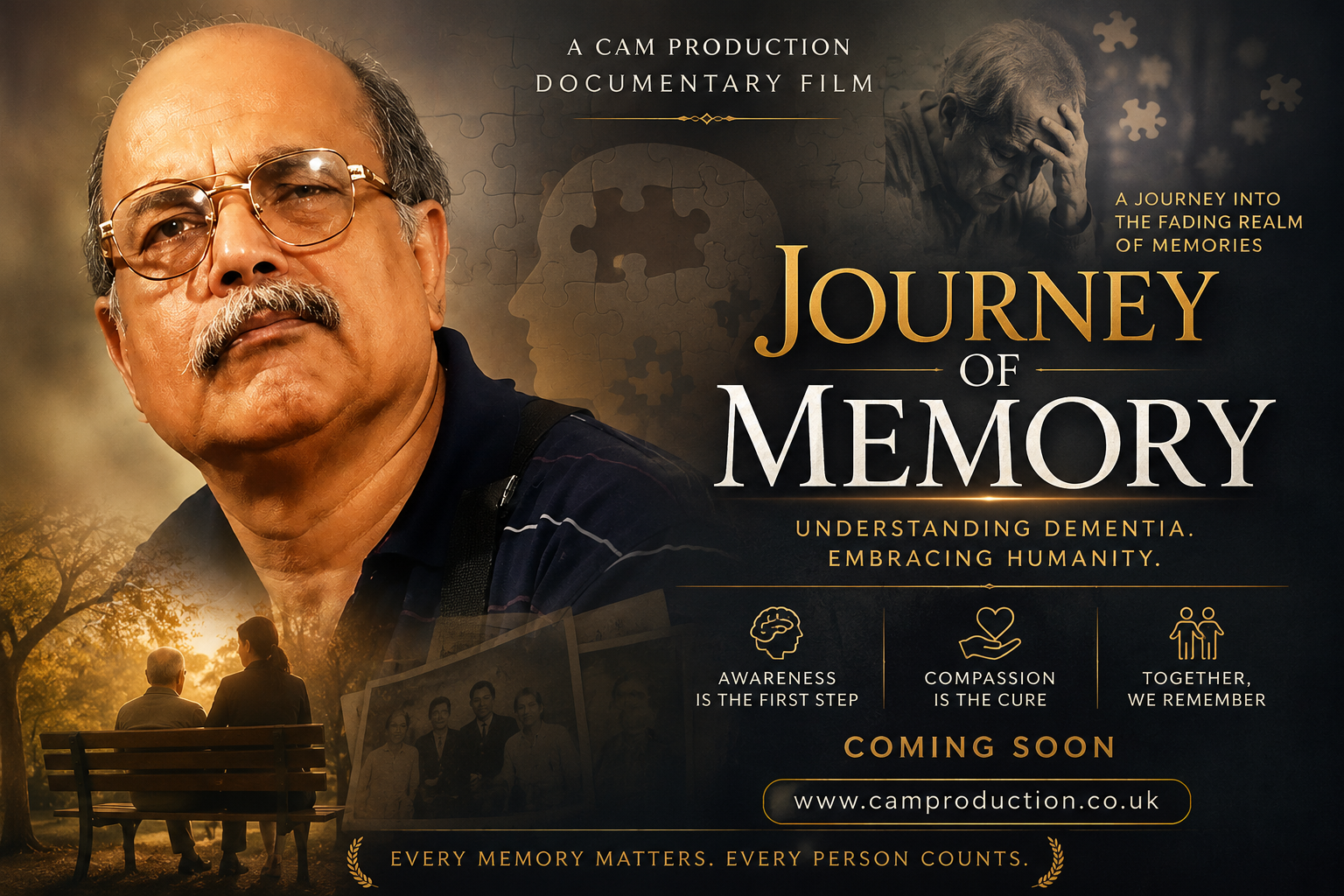
The first dramatic presentation, Blood Line, confronted the reality of thalassaemia. Rather than presenting statistics, it presented lives. A child's smile. A mother's quiet fear. A father's silent resilience. Every scene reminded the audience that illness is never experienced by the patient alone; it reshapes entire families. The applause that followed was long and heartfelt—not simply appreciation for fine acting, but recognition of a deeply human story. The emotional journey continued with Journey of Memory, an NHS-supported production exploring dementia. It portrayed the heartbreaking experience of gradually losing one's memories, recognising familiar faces as strangers and watching identity slowly dissolve. Yet even in its darkest moments, the play insisted upon hope. Memory may weaken. Love does not. Few productions have captured the emotional landscape of dementia with such sensitivity and artistic restraint.
Social Wounds Beyond Medicine
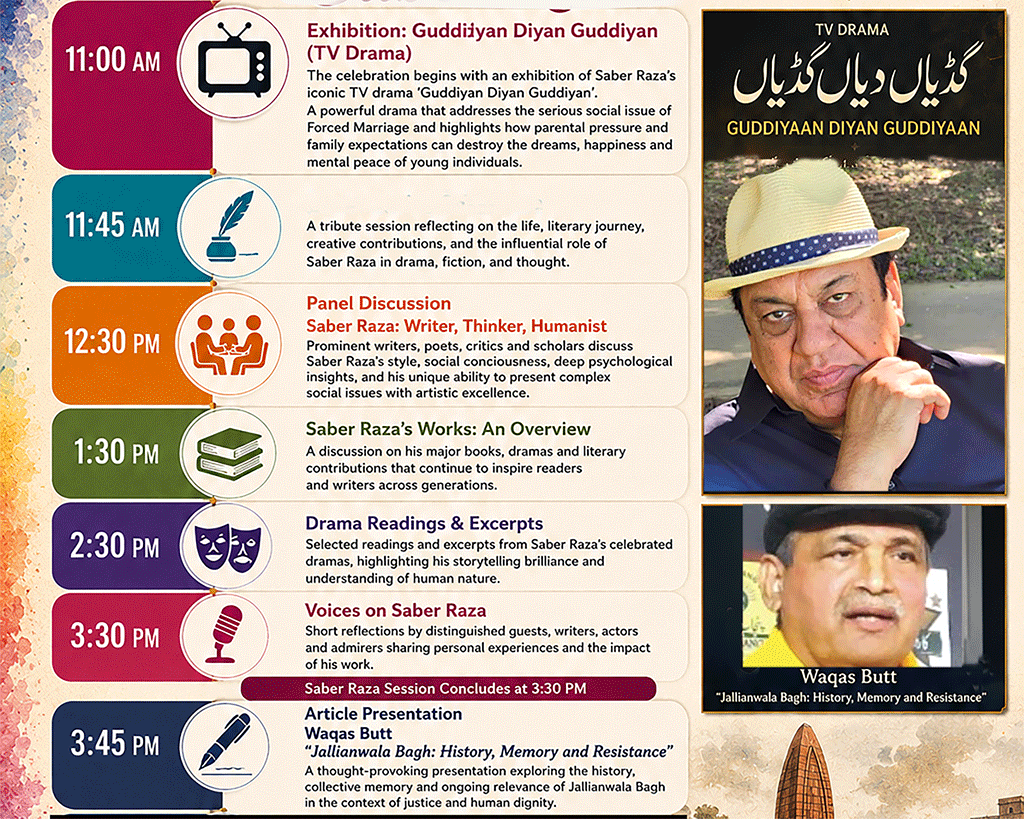
The festival then shifted from physical illness to social injustice through Gudiyan Diyan Gudiyan, written by renowned playwright Sabir Raza. The production confronted forced marriage, gender inequality and the emotional violence hidden beneath the language of tradition. Rather than preaching, the play allowed its characters to speak. Rather than accusing, it held a mirror before society. The audience responded with prolonged applause, recognising both its artistic excellence and its moral courage. Throughout the opening day, it became increasingly clear that Indus to Thames was asking one profound question: Can art heal society?The festival suggested that it can. Not by replacing medicine or legislation, but by transforming human consciousness.


Books That Continued the Conversation
As evening descended over Oldham, theatre gave way to literature. The launch of Tariq Mahmood's English novel The Second Coming celebrated not merely a new publication but the enduring power of storytelling to cross linguistic and cultural boundaries. This was followed by the launch of Jhalli, the English novel by Shagufta Gimmi. Speakers explored its psychological depth, its portrayal of identity, womanhood and emotional resilience, describing it as a significant contribution to contemporary diasporic literature. The theatre that had echoed with dramatic dialogue only hours earlier now listened quietly to the language of books. The questions raised on stage were now being explored through fiction.
Remembering Shared Heritage
The second day shifted attention towards the shared cultural heritage of South Asia. Documentaries on Katas Raj and Panja Sahib reminded audiences that history becomes richer when viewed through the lens of coexistence rather than division. The narration by Saman Lodhi brought particular warmth to the Panja Sahib documentary, combining historical sensitivity with emotional depth. The screenings became more than historical presentations. They became invitations to rediscover a shared civilisation.
Celebrating Sabir Raza
One of the emotional high points of the festival was Jashn-e-Sabir Raza, celebrating the remarkable literary contribution of playwright, novelist and critic Sabir Raza. Tributes came from scholars, writers and fellow artists who reflected upon his decades of service to Urdu literature in Britain. The evening felt less like an award ceremony than a family reunion. Flowers, embraces, memories and heartfelt speeches transformed the theatre into a celebration of literary companionship. The audience was not merely honouring a writer. They were honouring an entire generation that had carried Urdu across continents without allowing its voice to fade.


Building the Future
By the third day, conversations naturally turned towards the future. Rather than asking what had been achieved, participants asked what should come next. Under the leadership of Ehsan Shahid, the festival launched its ambitious Art for Health Five-Year Vision. The plan proposed expanding theatre productions on dementia, depression, thalassaemia, domestic abuse, forced marriage and mental wellbeing throughout communities, schools, libraries and healthcare institutions across the United Kingdom. Workshops in creative writing, music therapy, visual arts and storytelling were proposed alongside partnerships with the NHS, universities, local councils and community organisations. The objective was simple yet transformative: To make art part of public health. As one speaker beautifully remarked, "The greatest achievement of literature is not selling books. It is restoring hope to a single human heart."
The Journey Continues
Indus to Thames Festival 2026 was never simply a festival. It was a declaration that literature can still build bridges where politics often builds walls; that theatre can awaken compassion where indifference has taken root; and that art remains one of humanity's most enduring forms of healing. The postponed exhibition of Mahrukh's paintings reminds us that some journeys arrive later than expected—but they still arrive. As soon as her UK visit is confirmed, the organisers will announce the official dates for her long-awaited exhibition, adding another remarkable chapter to the continuing story of Indus to Thames. Because rivers never truly say goodbye. They simply continue their journey until they meet again.
Where Memory Became a Shared Home
By the fourth day, the festival had found its own rhythm. The unfamiliar had become familiar. Conversations that had begun with polite introductions had grown into genuine friendships. Visitors no longer arrived simply to attend individual sessions; they came because they had become part of something larger than themselves. Oldham Art Gallery no longer felt like a venue. It had become a meeting place of memories. The corridors echoed with conversations about literature, migration, identity and belonging. Every coffee break turned into an unexpected seminar. Every exhibition corner became a place where strangers exchanged stories of grandparents, childhoods, lost homes and new beginnings. That perhaps was the festival's greatest achievement. It succeeded in transforming an audience into a community.


Literature Beyond Borders
One of the defining themes of the later sessions was the role of literature in an increasingly fragmented world. Speakers observed that while technology has made communication easier than at any other point in history, genuine human conversation has become increasingly rare.Books, they argued, continue to perform a unique function. They slow us down. They force us to listen. They teach us to inhabit another person's life, if only for a few hundred pages. Several panel discussions explored the future of Urdu literature in Britain and Europe. Young writers sat alongside senior scholars, discussing not only language preservation but literary innovation. The question was no longer how to preserve Urdu. The question had become how Urdu could continue speaking to a new generation growing up between multiple cultures. The discussions were refreshingly optimistic. Rather than mourning what had been lost, participants focused on what could still be created. nglish as their first language, yet they listened attentively to Urdu poetry, Punjabi theatre and discussions on South Asian heritage with genuine interest. The festival quietly challenged the assumption that younger generations are disconnected
Young Voices, New Horizons
Perhaps the most encouraging sight throughout the festival was the presence of young people.Students, emerging writers, filmmakers, musicians and artists filled the audience with curiosity rather than obligation. Many were attending such an event for the very first time. Some had grown up speaking English as their first language, yet they listened attentively to Urdu poetry, Punjabi theatre and discussions on South Asian heritage with genuine interest. The festival quietly challenged the assumption that younger generations are disconnected from their cultural roots. What they require is not nostalgia. They require meaningful opportunities to engage. Indus to Thames provided exactly that. The organisers repeatedly emphasised that the future of the festival belongs not to established names alone but to the next generation of artists, scholars and cultural leaders. Several participants later described the festival as a place where they discovered not only literature but also a renewed sense of identity.


Art as Cultural Diplomacy
Throughout the week, one message became increasingly clear.Art possesses a remarkable ability to achieve what formal diplomacy often cannot. Governments negotiate agreements. Artists create understanding. Politicians frequently discuss coexistence. Writers, musicians and painters allow people to experience it. Visitors from different ethnic, linguistic and religious backgrounds found themselves applauding the same performances, discussing the same books and reflecting upon the same human emotions. In those moments, cultural identity ceased to be a barrier. It became a bridge. This spirit perfectly captured the philosophy behind Indus to Thames. The festival was never intended to represent one nation speaking to another. It represented humanity speaking to itself.
More Than a Festival
When the final guests slowly departed, something invisible remained within the walls of Oldham Art Gallery. Not banners. Not lights. Not decorations. But memories. The kind that cannot be packed into storage boxes once an event has finished. For six remarkable days, literature conversed with theatre. Music embraced memory. History met the present. Health found companionship in art. And two ancient rivers—one flowing through the cradle of one of the world's oldest civilisations, the other through the heart of modern Britain—met, not in geography, but in imagination. Perhaps that is why Indus to Thames felt less like an event and more like a movement. A movement reminding us that civilisations do not survive because they remember the past. They survive because they continue telling their stories to the future.
When Rivers Never Say Goodbye
Every festival eventually comes to an end. But not every festival truly finishes. Some remain behind like a melody that refuses to fade. As the final evening descended upon Oldham, the gallery slowly emptied. Volunteers quietly folded banners that had witnessed six extraordinary days of conversations, performances and shared memories. Technicians disconnected lights that had illuminated countless faces. Chairs were stacked neatly against silent walls. Yet no one seemed eager to leave. Small groups lingered in the foyer, reluctant to say goodbye. Phone numbers were exchanged. Books were signed. Promises were made. "We'll meet again next year." We'll collaborate." "We'll stay in touch." Perhaps every meaningful festival leaves behind something invisible. Not programmes. Not photographs. But relationships.
A City That Became a Story
For one remarkable week, Oldham became something far greater than a town in Greater Manchester. It became a crossroads. Writers from Pakistan shared ideas with academics from Britain. Young volunteers worked alongside seasoned artists. Doctors spoke with playwrights. Poets listened to psychiatrists. Musicians exchanged ideas with filmmakers. Painters found inspiration in conversations rather than canvases. Every discipline seemed to discover that it belonged to the same larger conversation. Art. Health. Memory. Humanity. The festival never attempted to erase differences. Instead, it celebrated them. Because civilisations become richer not by becoming identical, but by learning how to understand one another.
The Exhibition That Awaits
Among the many conversations that continued throughout the festival was one question repeated by countless visitors."When will Mahrukh's exhibition open?" The answer carried both disappointment and hope. Due to unavoidable travel circumstances, the celebrated Pakistani artist Mahrukh was unable to travel to the United Kingdom in time for this year's festival. Consequently, her long-awaited exhibition could not take place. Yet everyone involved agreed that such a collection deserved far more than a hurried substitute. It deserved its own moment. Its own audience. Its own celebration. The organisers have therefore confirmed that the exhibition has been postponed rather than cancelled. The moment Mahrukh's UK travel dates are finalised, the complete exhibition programme will be announced publicly. Her paintings, exploring memory, migration, identity and the emotional landscapes of contemporary life, remain one of the most eagerly anticipated chapters of the Indus to Thames journey. Sometimes the finest exhibitions begin long before the first painting is placed upon a gallery wall. They begin in expectation.
Beyond an Annual Festival
By the closing ceremony it had become evident that Indus to Thames was no longer simply an annual cultural programme. It had evolved into an idea. An idea that literature belongs alongside public health. That theatre can contribute to social change. That visual art can become a language of healing. That music can restore forgotten memories. That migration need not erase identity. That different cultures do not weaken one another. They enrich one another. The conversations initiated in Oldham now point towards future collaborations across Britain and beyond. Schools. Universities. Libraries. Hospitals. Community centres. Museums. Art galleries. Each represents another destination waiting to become part of this growing movement.
Where the Journey Continues
The River Indus has flowed for thousands of years through one of humanity's oldest civilisations. The River Thames has witnessed the rise of one of the modern world's great cities. Neither river has ever remained still. Both continue their journey. Perhaps that is why they became such fitting symbols for this festival. Cultures, like rivers, are never meant to stand motionless. They travel. They gather new stories. They carry old memories. They nourish every landscape they touch. And when they finally meet, they do not lose themselves. They become larger. As the doors of Oldham Art Gallery closed on another successful festival, no one present believed they had attended the conclusion of a story. They had witnessed its opening chapter. The next chapter will begin when Mahrukh's paintings finally arrive. Another will begin with new theatre productions. Another with new books. Another with young artists who, inspired by these few extraordinary days, will one day return—not as visitors, but as contributors. That is how culture survives. Not through monuments. But through people. Not through ceremonies. But through conversations. Not through nostalgia. But through imagination. And somewhere, beyond the quiet streets of Oldham, the River Thames continued its timeless journey towards the sea. Far away, the River Indus continued its own ancient course across the plains of Pakistan. Separated by continents. United by stories. Perhaps that has always been the true meaning of Indus to Thames. Not the meeting of two rivers. But the meeting of two hearts of civilisation. For rivers never truly say farewell. They simply keep flowing—until they meet again.
Where the Rivers Continue to Flow
Every gathering eventually disperses. Every stage is dismantled. Every light is switched off. Every chair returns to silence. Yet there are moments that refuse to end. Indus to Thames was one of them. When the final applause faded inside Oldham Art Gallery, nobody hurried towards the exit. People lingered in quiet conversation, exchanging smiles that had become warmer over six remarkable days. Volunteers carefully folded banners, technicians packed away equipment, and organisers paused for a moment, looking back at a stage that had carried stories from across continents. The theatre had fallen silent. But the conversations had not. Somewhere, a writer had found a new reader. A young volunteer had discovered a lifelong passion for literature. A doctor had begun thinking differently about the healing power of art. An actor had realised that theatre could change more than audiences—it could change communities. A child had heard Urdu poetry for the first time. Perhaps this was always the true success of the festival. Not the number of programmes presented. Not the number of guests who attended. But the number of hearts that quietly carried something home. For six unforgettable days, Oldham became far more than a town in Greater Manchester. It became a meeting place of memory. The River Indus arrived carrying five thousand years of civilisation. The River Thames welcomed it with the confidence of a modern multicultural Britain. Neither river attempted to become the other. Instead, each discovered itself reflected in the waters of the other. That is how cultures survive. Not by erasing differences. But by learning to recognise themselves in another civilisation. There remained, however, one beautiful promise still waiting to be fulfilled. Visitors frequently paused before the gallery space reserved for Pakistani artist Mahrukh. Many asked when her paintings would arrive. The answer was always accompanied by hope rather than disappointment. Her exhibition had not been cancelled. It had simply been postponed. Circumstances beyond anyone's control prevented her from travelling to the United Kingdom in time for this year's festival. Yet art has never measured itself by calendars.The organisers have confirmed that, as soon as Mahrukh's UK travel dates are finalised, her long- awaited solo exhibition will be announced.The empty gallery wall has therefore become more than an empty space. It has become a promise. A promise that this conversation between the Indus and the Thames is still unfinished. Perhaps that is exactly as it should be. Great conversations are never completed. They continue across generations. Across languages. Across borders. Across rivers. As evening slowly settled over Oldham, the gallery doors closed one final time. The streets became quiet again. Cars disappeared into the distance. The banners were gone. The lights were dimmed. Only memory remained. Far away, the River Indus continued its ancient journey across the plains of Pakistan. The River Thames continued its timeless passage through England. Separated by thousands of miles. United by one story. And perhaps, years from now, when another generation gathers for another Indus to Thames Festival, no one will remember how many speeches were delivered, how many books were launched or how many performances filled the stage. They will remember something far more important. That for a few extraordinary days in Oldham, art became compassion. Literature became dialogue. Theatre became healing. History became friendship. And two rivers reminded the world that civilisations are never destined to collide. They are destined to converse. Because rivers never truly say goodbye. They simply keep flowing until humanity is ready to listen again